
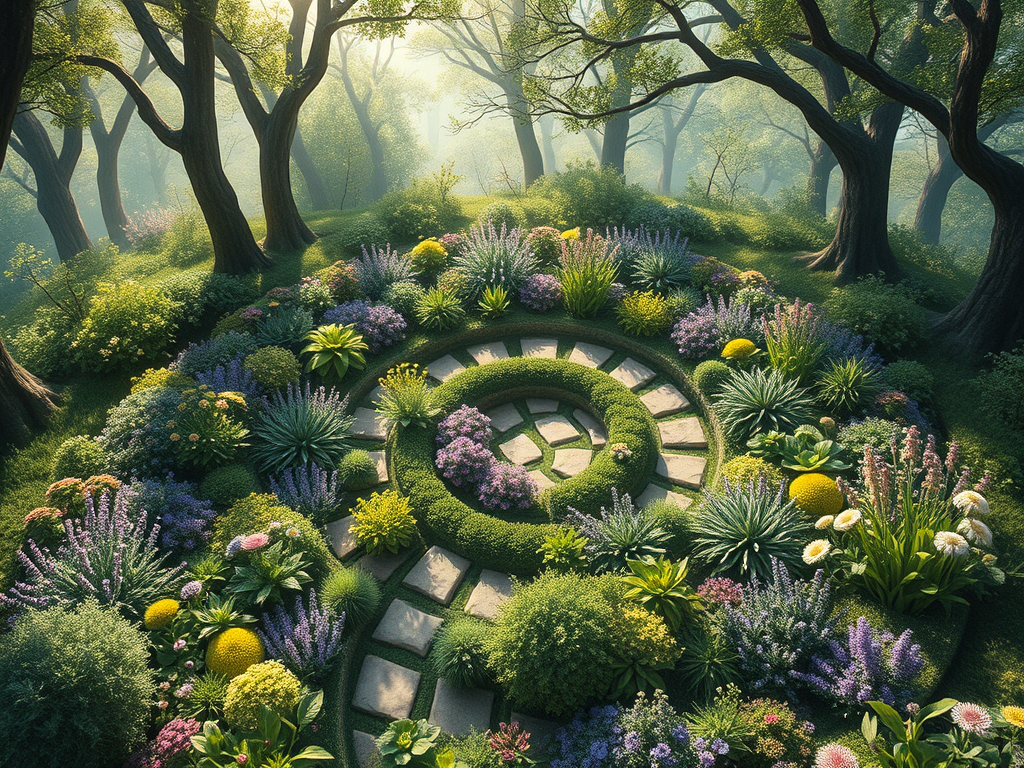
There’s something inherently enchanting about a garden, a space where life flourishes and the earth’s energy is palpable. Remember in the Practical Magic movie we were told to keep Rosemary by the garden gate, for protection? For those who walk the witch’s path, a garden isn’t just a collection of plants; it’s an outdoor apothecary, a sacred space, and a living testament to the power of nature. If you’ve dreamt of connecting more deeply with the earth and its botanical allies, it’s time to cultivate your own witchy garden!
The Essence of a Witchy Garden
This isn’t about perfectly manicured rows or botanical conformity. A witchy garden is wilder, more intuitive, and deeply personal. It’s a place where you can harvest ingredients for spells and remedies, meditate, connect with deities, or simply enjoy the calming presence of nature. The key is to choose herbs renowned for their magical properties and arrange them in a way that amplifies their energy.
Common Witchcraft Herbs to Grow
Many herbs have long been associated with magical practices due to their properties, historical uses, and folklore. Here are some of the most commonly used, perfect for your witchy patch:
- Mugwort (Artemisia vulgaris): Known for its connection to divination, dreams, and psychic abilities. Plant with care as it can be quite vigorous!
- Lavender (Lavandula angustifolia): For peace, purification, love, and sleep. Its calming scent is a magical boon.
- Rosemary (Salvia rosmarinus): Protection, purification, memory, and healing. A powerful all-around herb.
- Sage (Salvia officinalis): Cleansing, purification, wisdom, and protection. Essential for smudging and energetic clearing.
- Thyme (Thymus vulgaris): Courage, healing, purification, and psychic awareness.
- Chamomile (Matricaria chamomilla): Peace, sleep, money, and purification. Its gentle energy is wonderfully soothing.
- Mint (*Mentha spp.): Abundance, prosperity, purification, and healing. Many varieties offer diverse scents and energies.
- Rue (Ruta graveolens): Protection, exorcism, and warding off evil. Handle with gloves as it can cause skin irritation.
- Belladonna (Atropa belladonna): While historically significant in witchcraft, it is highly poisonous. If you choose to grow this, extreme caution is necessary, and it should be for ornamental or study purposes only, never for consumption or direct skin contact.
- Mullein (Verbascum thapsus): Protection, courage, health, and divination. Its tall stalks are quite striking.
Designing Your Magical Layout: Spirals and Pentagrams
Beyond simply planting, consider the energetic flow of your garden by incorporating sacred shapes. These layouts aren’t just aesthetically pleasing; they’re believed to amplify the magical properties of your herbs.
The Spiral Garden
A spiral represents journey, growth, cycles, and connection to the divine feminine. It’s an excellent choice for a compact space and creates a microclimate that benefits various plants.
- How to Create It:
- Choose a sunny, well-drained spot.
- Mark out a central point.
- Begin laying stones, bricks, or logs in a spiral shape, gradually building up the height as you move outwards. This creates different levels and pockets.
- Fill the sections with good quality soil.
- Planting: Place herbs that prefer more sun and drainage at the higher, outer points of the spiral (e.g., Rosemary, Thyme). Herbs that prefer slightly more moisture or partial shade can go in the lower, inner sections (e.g., Mint, Chamomile). You can also arrange them by magical correspondence – protective herbs in one section, healing in another.
This is NOT my garden. It’s just an example!

The Pentagram Garden
The pentagram, a five-pointed star, is a powerful symbol in many magical traditions, representing the five elements (Earth, Air, Fire, Water, Spirit) and protection.
- How to Create It:
- Select a relatively flat, open area.
- Carefully measure and mark out the points of a pentagram. You can use stakes and string for accuracy.
- You can create the outline with stones, wood, or even a different type of plant (like a low-growing groundcover).
- Planting: Each point of the star can be dedicated to a specific element or magical intention. For example:
- Top Point (Spirit): Mugwort, Lavender (for spiritual connection)
- Upper Right (Air): Mint, Chamomile (for communication, intellect)
- Lower Right (Fire): Rosemary, Thyme (for passion, protection)
- Lower Left (Water): Belladonna (if you choose to include it with extreme caution and awareness of its toxicity), Rue (for intuition, emotion)
- Upper Left (Earth): Sage, Mullein (for grounding, stability)
- You can also plant a central herb within the pentagram that represents your core intention or the overall energy of your garden.
Nurturing Your Magical Space
Once planted, your witchy garden needs care and intention.
- Watering: As needed, listening to your plants.
- Weeding: See this as a meditative practice, clearing away what doesn’t serve the space.
- Harvesting: Always thank the plant before taking from it. Harvest respectfully and mindfully.
- Infuse with Intention: Spend time in your garden. Meditate, perform small rituals, or simply sit and breathe in its energy. Talk to your plants, and let your intention flow into the soil.
Creating a witchy garden is a journey of co-creation with nature. It’s a place where magic isn’t just believed in, but actively cultivated. So grab your gloves, connect with the earth, and start sowing the seeds of your own enchanting botanical sanctuary!
Do you have a favorite magical herb? Share your garden dreams in the comments below!



 Tarreymere
Leave a comment