
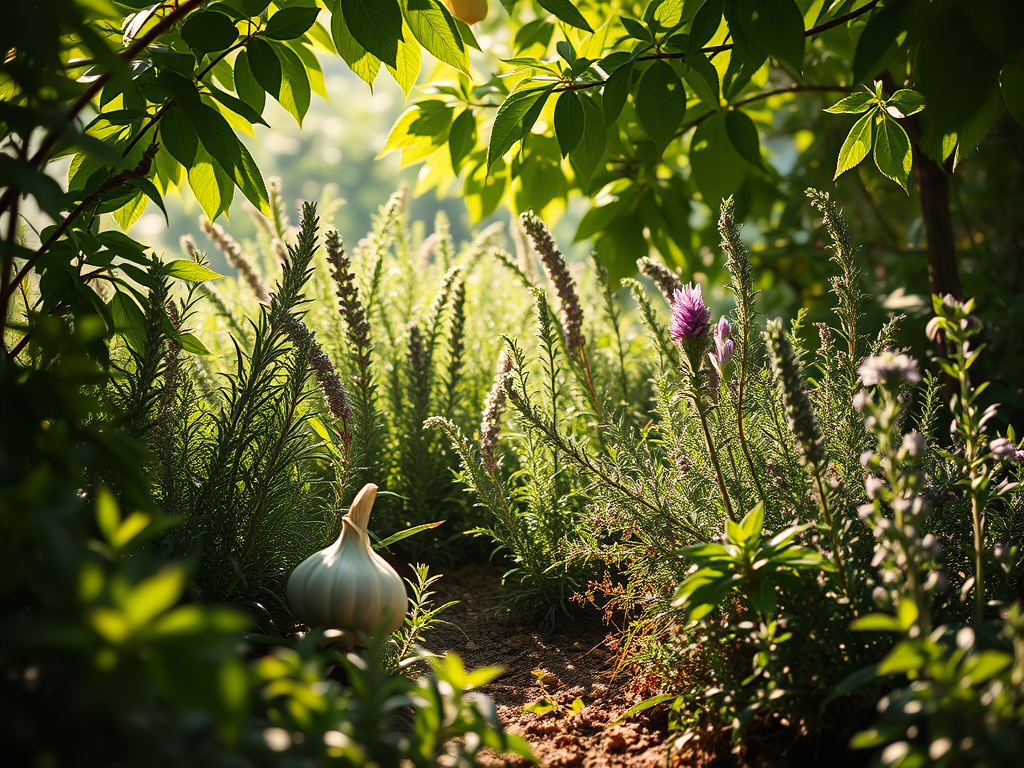
When we talk about “baneful” magic, it often conjures images of highly poisonous plants steeped in ancient lore. And while those plants hold immense power, a baneful garden doesn’t have to be a hazard zone. For witches seeking to explore the protective, banishing, and shadow aspects of botanical magic without the risks of deadly toxins, a well-chosen selection of non-toxic (to touch, and often even for accidental ingestion in small amounts) herbs offers powerful alternatives.
This approach allows for a deeper, safer interaction with your garden – you can prune without fear, brush past leaves without irritation, and still work with the potent energies these plants offer for protection, warding, and dispelling negativity.
The Power of Gentle Banefulness
A non-toxic baneful garden is about intention and energetic resonance. It acknowledges that many common plants possess incredible protective and boundary-setting qualities, even if they aren’t deadly. These plants can:
- Create Strong Wards: Form impenetrable energetic shields around your home or sacred space.
- Absorb and Dispel Negativity: Act as energetic sponges, drawing out unwanted energies.
- Sever Unwanted Ties: Help to break energetic cords or unhealthy connections.
- Enhance Psychic Protection: Fortify your auric field against intrusive thoughts or energies.
- Ground and Center: Provide a stable energetic anchor during challenging magical work.
The Safe & Potent Residents of Your Baneful Garden
Here are some excellent, non-toxic (to touch) herbs with strong baneful, protective, or dispelling properties. Remember, “non-toxic to touch” doesn’t necessarily mean edible in large quantities, and it’s always wise to exercise general caution and not purposefully ingest any plant you haven’t researched thoroughly for consumption.
- Garlic (Allium sativum): A classic protective herb. Used for warding off evil, banishing negative entities, and breaking hexes. Its pungent aroma is a deterrent to unwanted energies.
- Onion (Allium cepa): Similar to garlic, onions are excellent for absorbing negative energy and dispelling illness or ill-will. Burying an onion can draw out bad luck.
- Rosemary (Salvia rosmarinus): A powerhouse for protection, purification, and banishing. Burned to cleanse a space, carried for personal protection, or planted to deter thieves and negative influences.
- Thyme (Thymus vulgaris): For courage, purification, and warding off nightmares and negativity. Planting it around your home creates a protective barrier.
- Rue (Ruta graveolens): While often considered irritating to the skin for some people when handled extensively in direct sunlight, it is generally non-toxic to touch compared to the truly deadly plants. Its strong, bitter scent and protective folklore make it excellent for warding off evil, breaking curses, and dispelling unwanted attention. (Still, if you have sensitive skin, wear gloves).
- Black Pepper (Piper nigrum): Not typically grown as a garden plant in many climates, but its berries (peppercorns) are powerfully banishing. If you can grow it, it’s excellent for hot-foot powder or dispelling negativity.
- Chili Pepper (Capsicum annuum and others): Hot and fiery, these are fantastic for sending negative energy back to its source, driving away unwanted influences, and adding a kick to protective spells.
- Juniper (Juniperus communis): Its berries and needles are excellent for protection, purification, and breaking hexes. Planted around a property, it forms a powerful ward.
- Nettles (Urtica dioica): While they sting to touch, nettles are incredibly protective. Used for driving away evil, breaking curses, and returning ill-will to the sender. Handle with gloves!
- Burdock (Arctium lappa): Its sticky burrs can “catch” negative energy, and the root is excellent for protective cleansing and dispelling.
- Comfrey (Symphytum officinale): While not traditionally “baneful,” its strong protective and healing qualities make it excellent for creating a boundary of well-being, pushing away anything that would disrupt health or harmony.
Designing Your Safe & Potent Layout: Spirals and Pentagrams
Even with non-toxic plants, sacred geometry amplifies intention and creates powerful energetic forms within your garden.
The Energetic Spiral Garden
A spiral represents flow, journey, and the drawing in or pushing out of energy. For a baneful garden, it can be used to direct and focus protective energies.
- Choose Your Space: Select a sunny, well-drained spot.
- Define Your Spiral: Use stones, bricks, or even a different type of hardy border plant (like a low-growing boxwood or lavender) to create the rising spiral path. This visual definition enhances the energetic flow.
- Planting with Intention:
- Center: Place your most potent banishing or protective herbs here, like Rosemary or Rue, to act as the core of your energetic shield.
- Outward Flow: As you move outwards, plant herbs that provide layers of protection or dispel different types of negativity. For example: Thyme for courage and purification, Garlic for warding, Chili Peppers for sending back negativity.
- Consider planting a “return to sender” plant (like a thorny rose or a nettle) at the very end of your spiral, to symbolically send unwanted energy away.
The Protective Pentagram Garden
The pentagram, symbolizing the five elements and robust protection, is perfect for a baneful garden. It forms a strong magical shield.
- Mark Your Points: Carefully lay out the points of a pentagram. You can use a different colored gravel, low-growing herbs as markers (like Thyme or Oregano), or even small, naturally occurring stones.
- Elemental Placement: Assign your non-toxic baneful herbs to each point, aligning with elemental protection:
- Top Point (Spirit/Protection): Rosemary (all-purpose protection, cleansing).
- Upper Right (Air/Mind): Juniper (clearing mental fog, dispelling negative thoughts).
- Lower Right (Fire/Action): Chili Pepper (sending back, active dispelling, courage).
- Lower Left (Water/Emotion): Burdock (absorbing emotional negativity, releasing burdens).
- Upper Left (Earth/Grounding): Garlic or Onion (deep grounding, warding physical space).
- The Heart: In the center, you might place a central protective stone, a small statue, or a plant like Comfrey to provide a stable, healing anchor within the protective framework.
- Boundary Plants: Consider outlining the entire pentagram with a border of thorny plants (like non-toxic varieties of rose, or even a row of nettles for their protective sting – just remember your gloves!).
Tending Your Baneful Sanctuary
Nurturing your non-toxic baneful garden is a powerful act of magical self-care.
- Mindful Interaction: Spend time in your garden. Visualize the plants absorbing negativity, forming protective barriers, and sending away unwanted energies.
- Regular Clearing: Just like you weed, periodically “clear” your plants of absorbed negativity. You can do this by gently misting them with moon water, or physically touching them with the intention of releasing stored energies back to the earth for transmutation.
- Harvest with Purpose: When harvesting leaves or berries for spell work, do so with clear intention. Thank the plant and state your purpose.
- Trust Your Intuition: Your garden is a living entity. Pay attention to which plants thrive and which seem to resonate most strongly with your intentions.
Creating a non-toxic baneful garden is a powerful way to harness the protective forces of nature safely and effectively. It allows you to cultivate a sanctuary where you can explore the shadow aspects of magic with confidence and respect for both yourself and the botanical world.
What non-toxic herbs do you use for protection and banishing in your practice? Share your wisdom in the comments below!



 Tarreymere
Leave a comment